The Voyage
Paul Allen turned Microsoft money into the most consequential private exploration programme of the 2000s. M/Y Octopus — delivered 2003 — was the world's first true science-grade megayacht: two helicopters, a 10-person submersible (Pagoo), an ROV system (Octo ROV) capable of working in 2,000 metres, side-scan sonar across the bow, and a permanent crew willing to deploy at the request of any serious researcher. Octopus was, in effect, an open scientific instrument that Allen made available, at his own cost, to expeditions he found worth doing. Allen also operated M/Y Tatoosh (92 m) and the research vessel R/V Petrel.
The Stewardship
Allen's foundation, Vulcan Inc., funded the Global FinPrint shark survey (the most comprehensive shark and ray population study ever conducted), the Great Elephant Census in Africa, and the SkyTruth ocean-monitoring programme. Through Allen Coral Atlas his team produced the first high-resolution global map of every shallow tropical reef on Earth. His giving on Earth-observation and ocean monitoring runs into the hundreds of millions.
The Vessels
M/Y Octopus (126 m, Lürssen 2003) — the original "science platform megayacht"; carried Pagoo submersible to find the bell of HMS Hood (2015), USS Indianapolis (2017), USS Lexington (2018), USS Juneau, USS Helena, and many others. R/V Petrel (76 m) — Allen's dedicated wreck-hunting and ocean-research vessel, retired 2022. M/Y Tatoosh (92 m) — earlier flagship.
Why this voice on Wind Voyage
Octopus is the proof that a private yacht can be a serious instrument. It is also the proof that you don't have to wait for someone else to fund the expedition you want done. Wind Voyage is built on the same premise — except the next generation expects you to do it on the wind, not on the diesel.
Frequently Asked
About Paul Allen
What yacht did Paul Allen own?
Paul Allen owned M/Y Octopus — a 126-metre Lürssen delivered in 2003 and widely considered the original "science platform megayacht." Octopus carried two helicopters, a 10-person submersible (Pagoo), an ROV system rated to 2,000 metres, and side-scan sonar, and made its science capability available to outside researchers.
What wrecks did Paul Allen's team discover?
Allen's wreck-recovery programme, operated from M/Y Octopus and later R/V Petrel, located the wrecks of USS Indianapolis (2017), HMS Hood's bell (2015), USS Lexington (2018), USS Juneau, USS Helena, the Japanese battleship Musashi, and dozens of other major World War II warships.
What was Paul Allen's ocean philanthropy?
Through Vulcan Inc., Allen funded the Global FinPrint shark survey (the largest population study ever conducted), the Allen Coral Atlas (the first high-resolution global map of every shallow tropical reef on Earth), and the SkyTruth ocean-monitoring programme. His ocean and Earth-observation giving runs into the hundreds of millions of dollars.

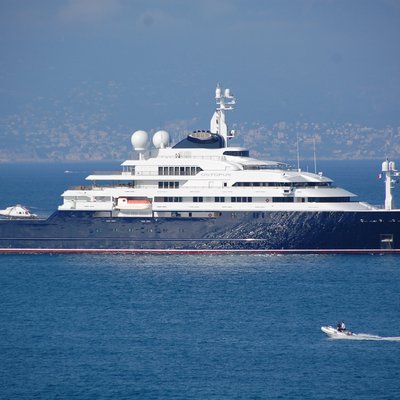 M/Y Octopus